Lean methodology, business tools guides, and operational excellence — straight from the field.
The Journey Behind LLeanStore
Global Challenges: Waste, Inefficiency, Shrinking Margins
Many first-time supervisors believe that solving every problem themselves is the mark of a great leader. In reality, constantly stepping in can create burnout and prevent the team from growing. Effective leadership isn't about becoming indispensable—it's about helping others become capable.
Visual management is meant to make problems visible and guide action—not become another routine that people complete without thinking. Whether it's a whiteboard, an Excel file, or a digital dashboard, its value comes from how teams use the information to make decisions and improve work every day.
For years, I thought my biggest productivity challenge was having too much work. So I kept changing my tools instead of questioning my system. Ironically, the solution wasn't adding more features—it was simplifying the way I looked at my tasks and focusing on one thing at a time.
In many meetings, the first voices we hear become the ones we trust most. But some of the best ideas come from people who speak less and observe more. Great supervisors don't just listen to whoever talks first—they create opportunities for every perspective to be heard.
A quiet team can seem like a manager's dream. No complaints, no conflict, and no difficult conversations. But in many workplaces, silence isn't a sign that everything is fine—it can be a sign that people don't feel safe enough to speak up. One of the most valuable skills a leader can develop is creating an environment where the truth is welcomed before problems become crises.
Many first-time supervisors believe they need everyone on the team to like them. To avoid conflict, they become overly accommodating and hesitate to set boundaries. But effective leadership isn't built on popularity—it's built on fairness, consistency, and the courage to make difficult decisions when they're necessary.
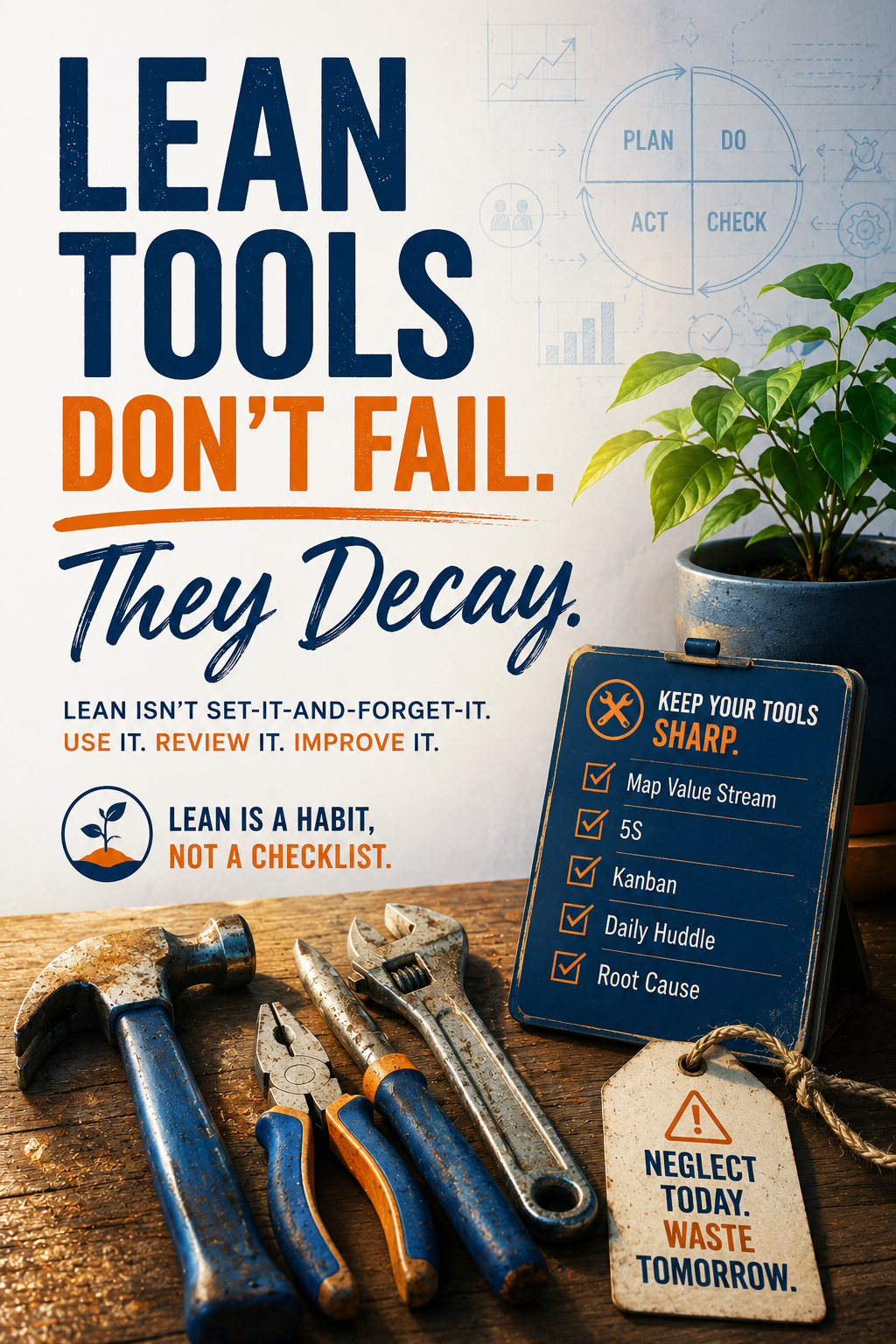
Many improvement ideas don't fail because they're bad—they fail because nobody follows up. Discover why PDCA reports are often forgotten and what successful teams do differently to sustain continuous improvement through visibility, ownership, and disciplined tracking.
I've spent years using Excel to analyze data, build dashboards, and support continuous improvement. The problem was never the spreadsheet itself. The challenge began when multiple people had to keep it updated. That's one of the reasons I started building practical Lean tools—to reduce the friction that keeps good ideas from becoming lasting improvements.
The way a supervisor gives feedback can shape an entire team's culture. Public criticism may create fear and silence, while respectful private coaching encourages learning and trust. Likewise, recognizing good work in front of others reinforces positive behaviors and motivates the whole team to grow.
I never planned to become a software developer. After spending more than a decade in Lean Manufacturing, I kept running into the same frustrations: forgotten improvement ideas, outdated spreadsheets, and PDCA reports that nobody revisited. Eventually, I stopped waiting for the perfect tool and started building the ones I wished existed.
Many organizations promote their best performers into leadership positions, but technical excellence and leadership are different skills. The transition can feel overwhelming, especially when formal guidance is limited. The good news is that leadership isn't something you're born with—it's something you can learn.